

Let’s talk about career frameworks. You know, those documents that are supposed to turn your tech career into a beautifully ordered progression from novice to expert. Here’s the truth: most of them are overcomplicated and underutilized. But they don’t have to be.
This post introduces the concept of career frameworks for tech leaders in startups and mid-sized companies. I’ll cover the basics: what career frameworks are, their purpose, and how they should adapt as your organization expands. My goal is to help you think about how to grow your team’s career, whether you’re just beginning or trying to make things better. While not an exhaustive analysis, this primer offers key insights to guide your approach to career progression in tech.
What Is a Career Framework?
At its core, a career framework is a roadmap. It’s the tech industry’s attempt to structure professional growth. Ideally, it covers:
- Levels: From entry-level to senior leadership
- Competencies: Skills needed to level up
- Track Record: Evidence of growth and impact
- Compensation: Salary bands and other benefits
Why Bother with Career Frameworks?
- For Managers: It provides a structured approach to evaluations and promotions.
- For Everyone Else: It shows a clear path for career progression.
When Do You Actually Need This?
Here’s a practical guide based on company size:
- 1–10 people: You’re all wearing multiple hats. Your framework is “do everything, learn fast.”
- 10–50 people: Define basic levels. Junior, Mid, Senior. That’s enough.
- 50–200 people: Now you can start thinking about tracks and competencies. Keep it simple.
- 200+ people: You can develop a more comprehensive framework, but remember — usability is key.
The Evolution of Effective Career Frameworks
- The “Startup Phase” (1-5 people)
- Needs: A shared document outlining key responsibilities
- Focus: Survival, product shipment, customer satisfaction
- “The Early Growth Phase” (5-15 people)
- Needs: 2-3 broad levels (Junior, Mid, Senior)
- Focus: Basic expectations for each level, emphasis on impact
- “The Structured Growth Phase” (15–50 people)
- Needs: Defined tracks (Individual Contributor vs. Management), core skills identified
- Focus: Clear distinctions between levels, emphasis on leadership (technical or people)
- The “Scaling Phase” (50+ people)
- Needs: More granular skill assessments, deeper career tracks
- Focus: Internal mobility, specialization options, but maintaining simplicity
The Career Framework Litmus Test
Before implementing your framework, ask:
- Can most of your team explain it in under 30 seconds?
- Does it actually help people understand how to grow?
- Is it practical for use in performance reviews?
If the answer to any of these is no, it’s time to simplify.
What Engineers Actually Want
Based on years of experience, here’s what matters most:
- Clarity: “What do I need to do to advance?”
- Impact: “How can I make a significant contribution?”
- Growth: “Am I learning and challenging myself?”
- Fairness: “Are standards consistently applied?”
The Minimalist Career Framework
For most companies under 100 people, here’s a streamlined approach:
- Junior: Learning phase. Expected to ask questions, make mistakes, and grow rapidly.
- Mid-level: Solid contributor. Can own features end-to-end and mentor juniors.
- Senior: Force multiplier. Thinks beyond immediate tasks and improves team performance.
- Staff/Principal: Shapes organizational direction. Company-wide impact.
For each level, define expectations in three areas:
- Technical skills
- Communication & Collaboration
- Impact & Leadership
Real-World Examples: A Balanced View
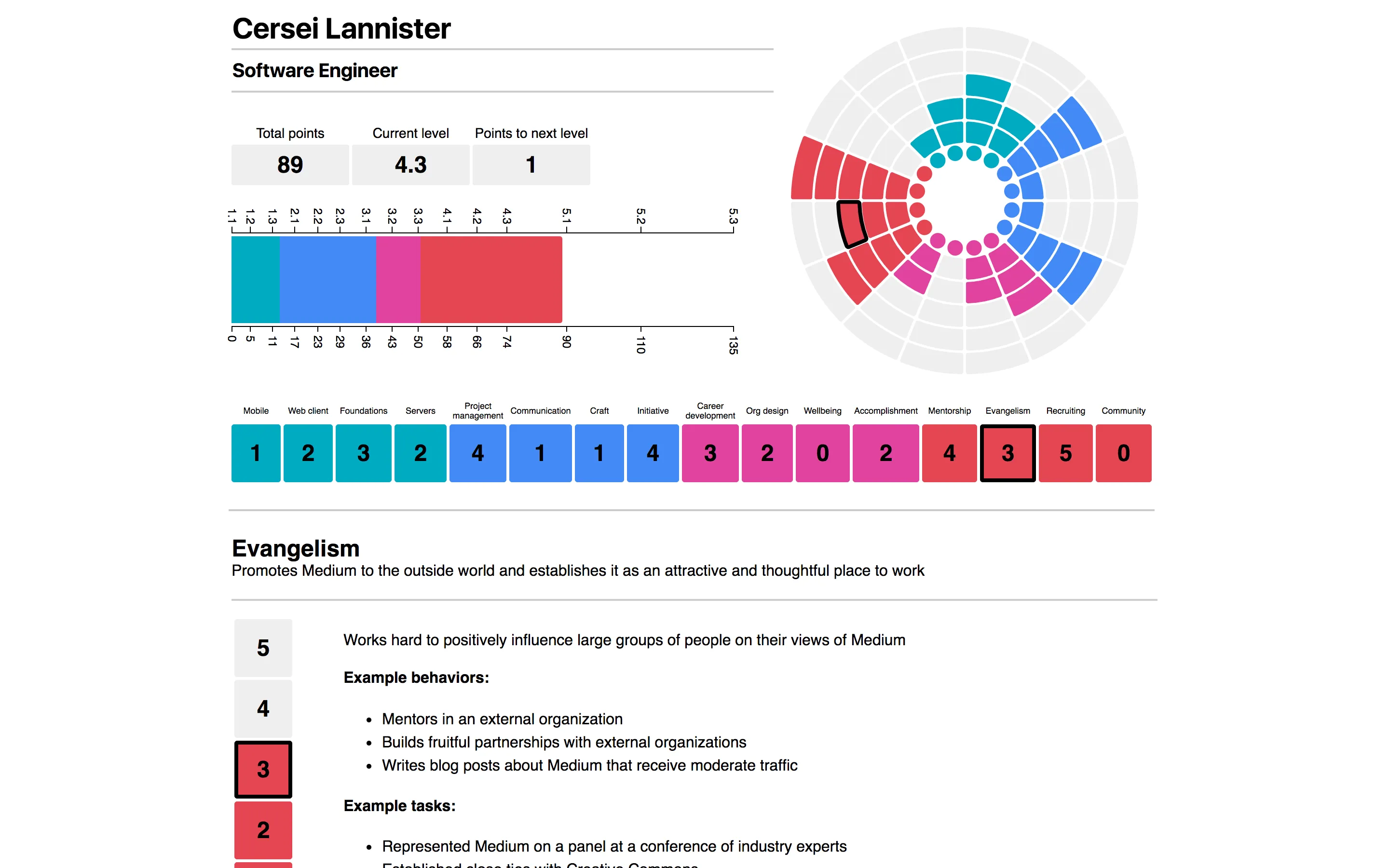
The Snowflake Model (Medium):
Complex but potentially powerful for larger organizations. Offers granular skill assessment across multiple dimensions. Suitable for companies with diverse roles and specializations.
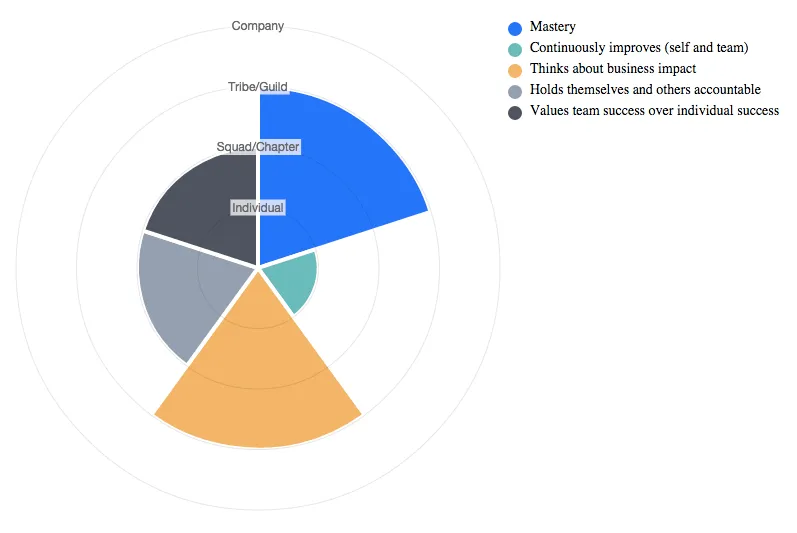
Spotify’s Model:
Simple, clear, and focused on impact. Scales well from mid-size to larger organizations without excessive complexity.
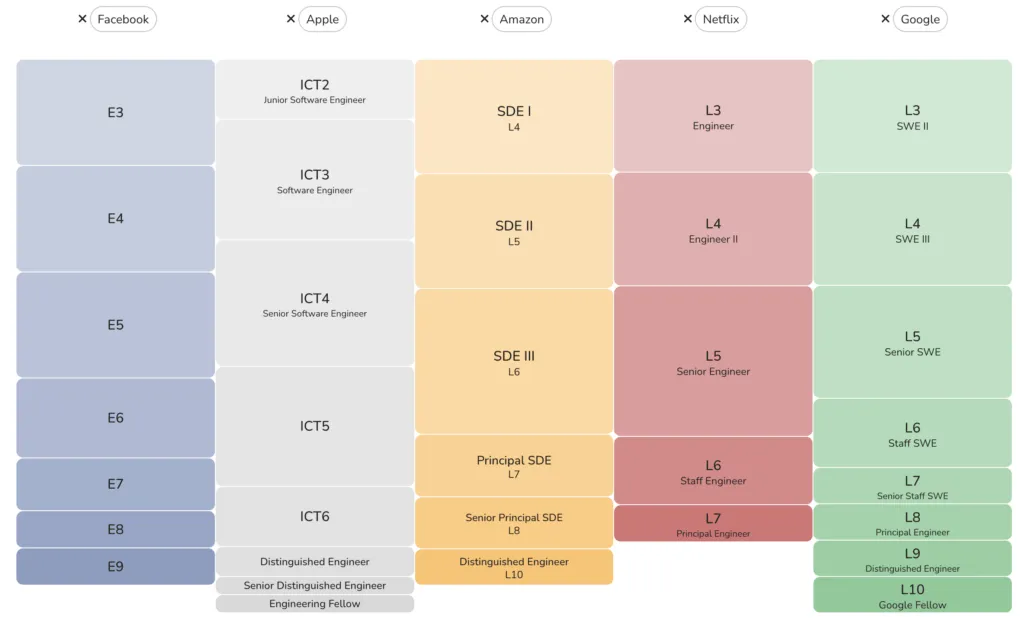
Google’s Ladder:
Comprehensive and detailed, fitting for a tech giant. While too complex for most, it offers insights into structuring growth at scale.
Tailoring Your Framework
The best career framework fits your organization’s size, culture, and needs:
- Startups (< 50 people): Keep it simple. Focus on impact and key skills.
- Mid-size companies (50-500): Introduce more structure, but maintain flexibility.
- Large organizations (500+): More complex models might be appropriate, but ensure they don’t become bureaucratic hurdles.
The Human Element
No career framework can replace meaningful human interaction. The most effective growth often happens in one-on-one discussions about aspirations, challenges, and opportunities.
Conclusion: Simplicity is Key
Your career framework should be a tool, not a hindrance. It should clarify, not confuse. It should inspire, not intimidate.
Career frameworks are living documents that should evolve with your team. The level of sophistication should match your current challenges, not hypothetical future scenarios.
Remember, we’re in the business of building software and solving problems. Let’s ensure our career frameworks support that mission rather than complicate it.
Stay focused, keep it simple, and may your career progression be clear and achievable.